Halal has an image problem.
And that's an opportunity. Halal restaurants massively under-invest in design — here's what it costs, and why the first to understand it gains a real head start.
There's a paradox I've run into for ten years in this trade. Halal restaurants serving excellent food — aged meat, family recipes, fresh produce prepared every morning — that present themselves to the world with a WordArt logo, photos shot on a phone under fluorescent light, and a storefront cluttered with stickers: "Free Wifi", "Meal vouchers", "Certified halal", "Uber Eats".
The product deserves better than its image. And that gap isn't just a matter of aesthetics: it costs money, every single day.
"The product was already there. All it lacked was the image to say so."
01 / The observationWhat under-investment looks like
When you under-invest in the design of a halal restaurant, it doesn't show in just one place. It shows everywhere, and it adds up:
- A generic logo, usually a free font paired with a clip-art burger or flame icon
- Poorly lit food photos that, at best, make you hungry — and at worst, do the opposite
- A storefront that piles on ten messages instead of carrying a single strong one
- Illegible menus, laminated and amended with a marker pen
- An Instagram presence that doesn't reflect the real quality of the plate
Taken in isolation, each of these seems minor. Strung together, they tell the customer a story before they've even tasted a thing: "the details aren't looked after here."
02 / The costWhat it really costs
This is where the subject becomes economic, not decorative. A weak image costs you across four measurable levers.
Perceived value. Two identical burgers, one served in a polished world, the other in a neglected setting: the first can sell for €2 to €3 more, and no one bats an eye. Design is what justifies the price.
The type of clientele. A premium image draws a clientele that spends differently, comes back more often, and shares of their own accord on social media. Image filters — upward, or downward.
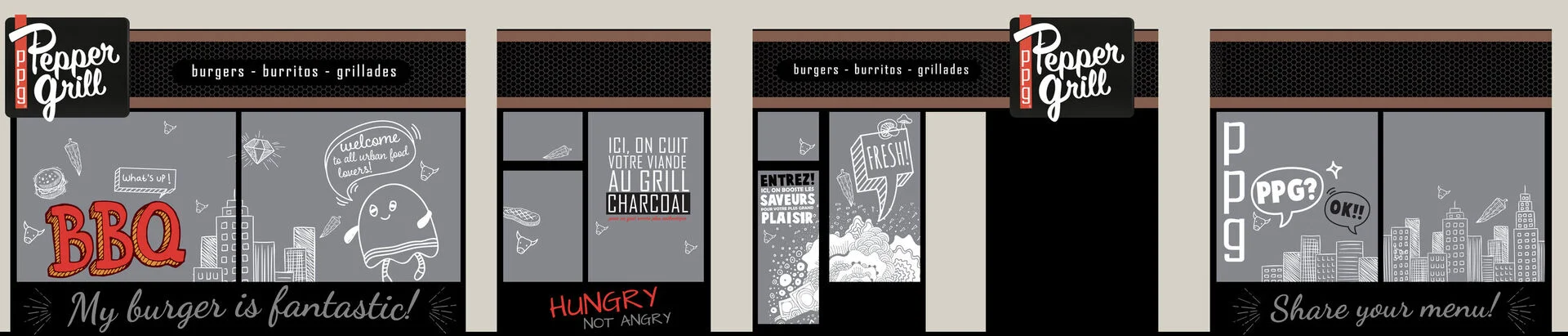
The ability to replicate. A restaurant looking to open a second or third location needs a system: an identity that rolls out identically. Without one, every opening starts from scratch and the brand dilutes. That's exactly the work we did for Pepper Grill and Pizza Time — networks where visual consistency from one location to the next was the very condition for expansion.
Visual word of mouth. Today, we eat with our eyes first, on a screen. A poorly photographed dish doesn't travel. Careful photo direction does. In a sector where Instagram does as much to fill tables as a good location, that's anything but a detail.
03 / The causeWhy this under-investment?
It's not a question of means — these restaurants invest in high-end kitchen equipment without hesitation. It's a question of seeing design as a cost rather than an investment. Three reasons come up again and again:
- "It already works without it" — true in the short term, false the moment a better-positioned competitor opens across the street
- "Design is a luxury" — an inherited belief, when in fact it's the restaurant's number-one salesperson, open around the clock
- The lack of references — few examples of halal restaurants that have turned design into a weapon. And that is precisely where the opportunity lies.
Being the first to do it well
Here's the good news. When an entire sector under-invests in its image, the first to take it seriously gains a considerable head start. They don't need to be better than everyone — just visibly better than their immediate neighbours.
The halal restaurant market is coming of age: a new generation of restaurateurs — demanding, well-travelled, fluent in the codes of fine fast food — who understand that a strong brand isn't a betrayal of their values, but a way of honouring them.
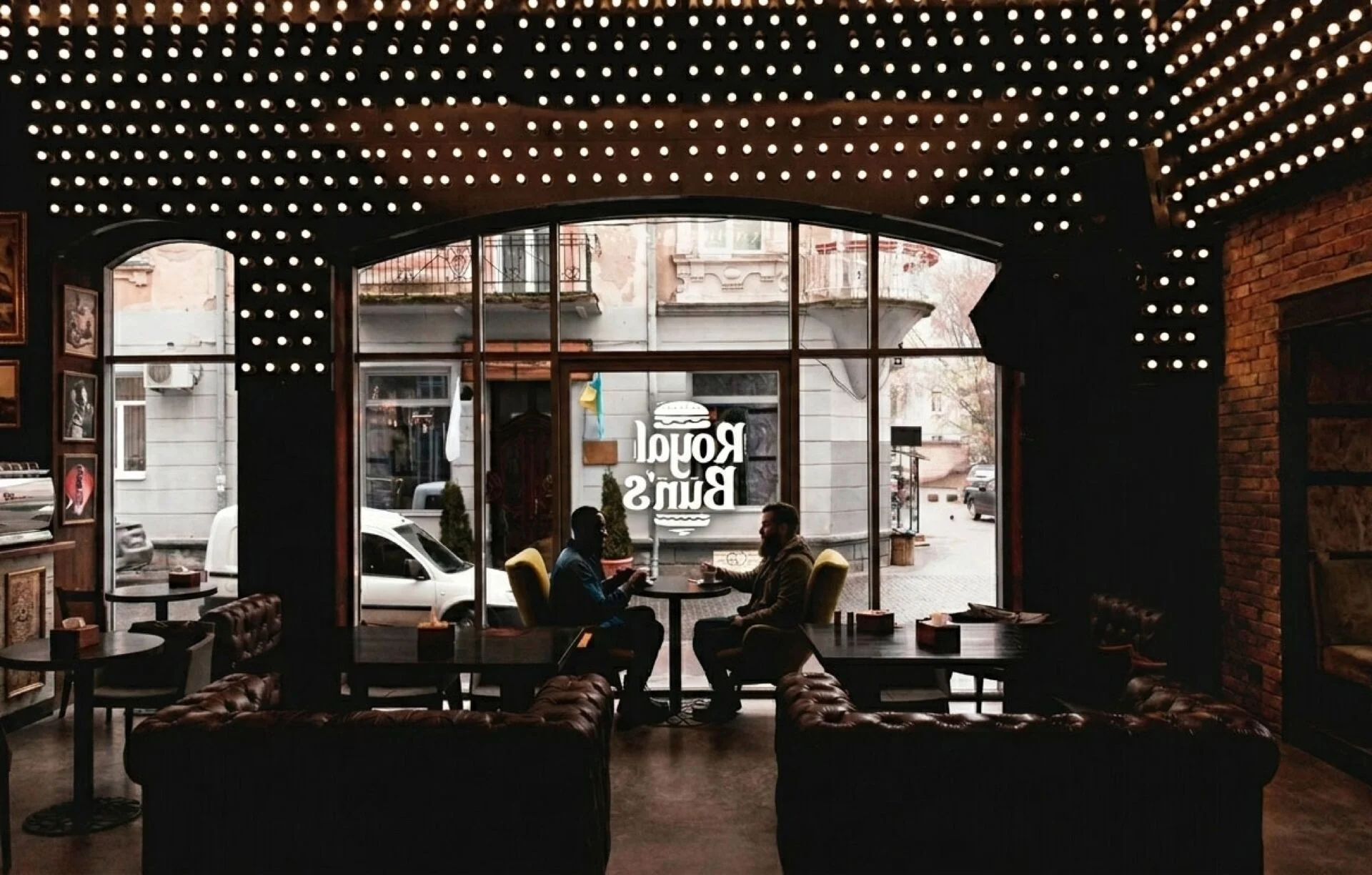
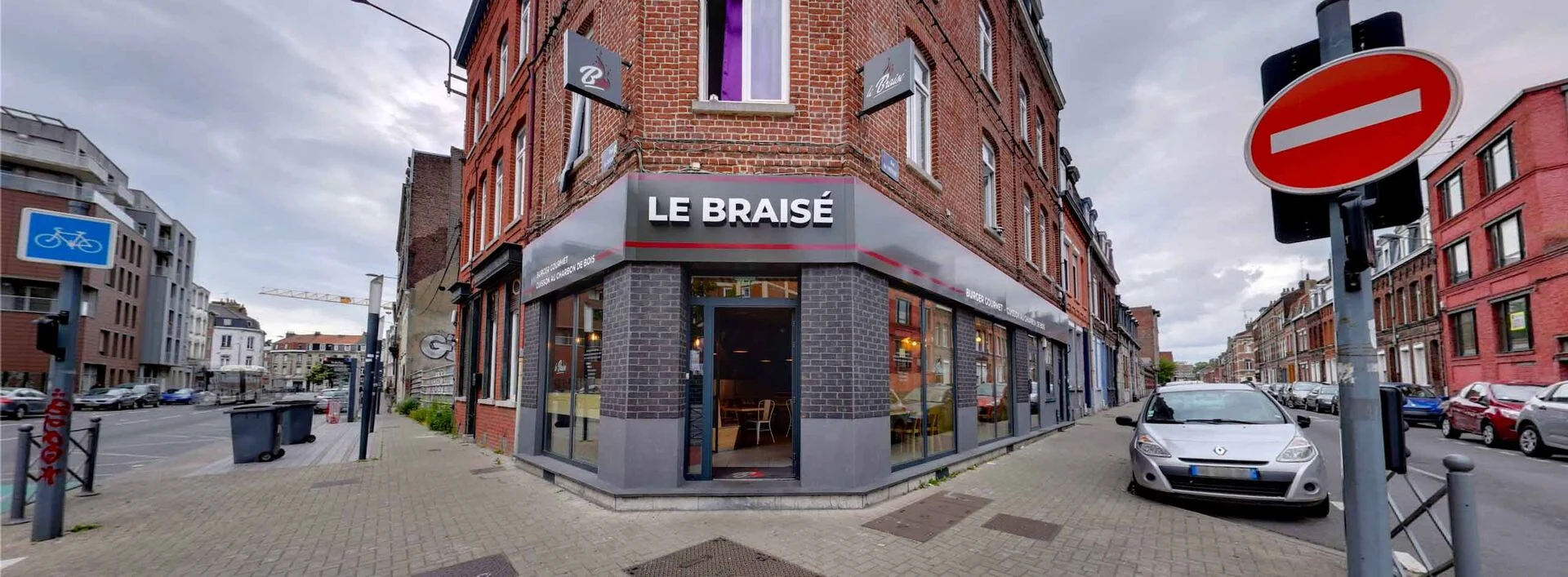
We saw it first-hand with Royal Bun's, where a confident identity and genuine photo direction turned a good burger into a desirable brand. And with Le Braisé, where the logo and art direction gave the Lille-based brand a presence worthy of its kitchen. Every time, the same observation: the product was already there — all it lacked was the image to say so.
In conclusion
Halal doesn't have a quality problem. It has an image problem — and an image problem can be fixed. Better still: it's one of the rare investments in hospitality whose return shows from the very first week, in perceived value, average spend and footfall.
The segment that learns to treat its image with the same seriousness as its food is only beginning to emerge. If you're running a restaurant project and you sense that gap between what you serve and what you show, let's talk. This is exactly what we do — and here is our work to judge for yourself.
"Design is the restaurant's number-one salesperson. Open around the clock."
Your kitchen is ready.
And your image?
Identity, photo direction, storefronts, menus, social media: we build coherent restaurant brands, from the first sketch to the in-store rollout.